
Every year at this time, Hammock editors work with our clients to compile annual editorial slates. Here are a few hints we’ve learned that make the process go more smoothly—and pump up magazine stakeholders about the coming year.
Adjectives can take three forms. I’m not talking about liquid, solid or gas; I mean positive, comparative and superlative.
Simply put, the positive form of an adjective describes a single noun or pronoun.
The comparative form of an adjective compares two nouns or pronouns.
The superlative form then compares three or more nouns or pronouns.
Not sure when to use more/most, double the last consonant or change y to i? Here are a few general rules. But remember, there are always exceptions.
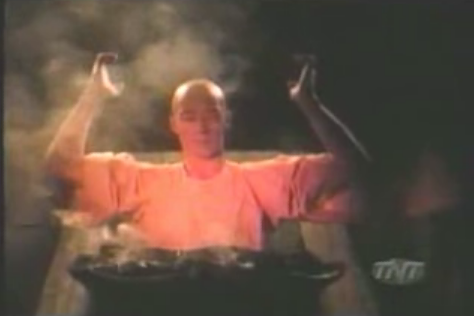
Fans of the old Kung Fu TV series (who get the joke of David Carradine advertising the Real Yellow Pages), will recall the tagline description of the Shaolin warrior-monks: LISTENED FOR – they cannot be heard. LOOKED FOR – they cannot be seen. FELT FOR – they cannot be touched. Which happens to be the description of an A-1 interviewer.
Fortunately, unlike Kwai-chang Caine, you don’t need to spend years of meditating and splitting boards with your hands to comprehend this. You don’t even need to get dragon and tiger brands. Lessons are all around you:
How many times has your spouse said “Are you listening to me?” and you’ve mumbled “Uh-huh.” You were being truthful – your ears were working, but your mind wasn’t. Listening is a physical function; hearing is a mental one.
Similarly, how many times have you looked for your wallet or keys, only to give up and then spot them … in a place you had looked. Again, looking is a physical action, while seeing is a deliberate mental action. You overlook things (like keys on the counter – and typos!) because your unfocused mind lies – it’s already said, “They can’t be here.”
How about touch? Back to those elusive keys – you patted your pockets, the newspaper, the sofa. You get the drift by now – your mind was lying again.
What does this have to do with interviewing? If you only listen, look and feel (a sense that is usually not that much used in interviews), you will come away with what you expected to … and possibly miss things that could have added detail and depth to your final product.
The more you can push back your preconceptions, the more room you make for what’s actually going on in the interview. This is especially important in personality profiles and human interest stories. But it’s something to practice in every interview situation – think of each opportunity as a Kung Fu Interview.
We have more interview tips elsewhere on Hammock.com. Put all these together, and over time, you will find that you have learned much, Grasshopper.
You can’t be too careful with stock photos.
One wonders how much time the Birmingham City Council – of England – has spent actually out and about in their own city, after the council authorized and issued a brochure bearing a picture of Birmingham – Alabama.
The British city fathers tried the old “we were just looking for something generic” excuse, but that sounded pretty lame, given they were praising their citizens for recycling efforts. Surely they had a nice shot of their town someplace?
It’s a cautionary tale for those of us who use stock photos. Consumer Reports readers often point out instances where the same stock image has been used for similar, or even competing, products and services. I know I have seen the woman in the center probably 10 times over the past few years, advertising jewelry, cosmetics and face lifts.
Some years ago, at another company, we were asked to do a story on a client’s newest acquisition – a mortgage processing firm. The acquisition’s corporate brochure had a cover photo of those lovely Victorian homes in San Francisco known as “the Painted Ladies.” Upon close examination, it was clear there was a guy in his Fruit-of-the-Looms standing in a window. We never told the client, since the brochure was dumped right after the acquisition.
I must’ve stared at that Word document for almost two hours straight Wednesday. I was writing an article for a client, using beautiful and powerful words and making sure the flow was nice and smooth. I had read it over and over again to make sure I hadn’t missed anything. They were going to love it.
At one point I finally let myself go to the kitchen and get a nice glass of ice tea, and when I returned to my desk, there it was: a spelling error right in the title. Spellcheck didn’t catch it. (It was a word, after all, just not the word I wanted to use.) How did I miss it before? I would definitely be sending this piece to a fellow editor for proofing of course, but I wanted it to be in the best shape possible before then.
So I started thinking: How can we self-edit to produce our best work?
My sweet mother rarely sends me an e-mail without a semicolon in it. She loves that little piece of punctuation. I’ll give her credit though; 99 percent of the time she uses it correctly.
For writers and editors, the semicolon is a must for adding variety to our words. But not everyone is a fan of the “supercomma” as it’s called by some. Is it stronger than a comma? Weaker than a period? Kinda.
Here are four common (and correct) ways to use a semicolon:
“Magazine” originally meant a storehouse for supplies — especially weapons and ammunition. So magazines held a variety of things in all shapes and sizes. For most people today, “magazine” means a periodic publication filled with — you guessed it — a variety of items in all shapes and sizes. Today, small is the new big.
Editors kick the word “style” around a lot. Like spoken Chinese, what we mean often depends on the context and inflection. We work diligently to create and maintain style in its various meanings, but like all rules, style sometimes improves when you break it.
Sometimes style refers to a publication’s “style guide.” Ours is based on the Associated Press stylebook, but customized for different clients. For instance, our clients tend to treat elements like titles, dates and state names in different ways:
The point is that every publication has its own set of style rules for consistency in spelling, grammar, even the tense used in attributed quotations.
Then there are times when “style” refers to the overall voice — some call it sound or tone or feeling — of a publication. The style guide can have an effect on this:
For instance, the New York Times and the Wall Street Journal use titles before names. So one reads about Mayor Michael Bloomberg on first reference, then Mr. Bloomberg thereafter. The tone is more formal, not so much deferential as polite. Quite different from, say, Rolling Stone.
The late NBC political bureau chief Tim Russert, who passed away last week, was famous for the behind-the-scenes preparation he put into interviews on his weekly show, “Meet the Press.” He never interviewed politicians without knowing every stance they’d taken, every vote they’d cast or every statement they’d made on the record. Even America’s most celebrated interviewer, Barbara Walters, doesn’t wing it. After poring through research on her subject, she jots her questions down on index cards, and shuffles and reshuffles until she finds the right order.
Maybe your next interview isn’t with a politician or a celebrity, but preparation is still important because it gives you the credibility you need to connect with whomever you interview. Sure, you’ll run into some sound-bite-friendly folks who are natural talkers and will give you great quotes no matter what you ask. But it’s a better bet that you’ll have to deal with awkward silences, canned responses, hidden agendas and occasional egos—so you must be ready. Read on for five tried-and-true steps we use to prepare for an interview.
A visually arresting image is the first thing readers notice about a cover, as Art Director Kerri Davis explains in this post. But in that brief moment of attention you also have to have the right words to whet their appetites and invite them to actually open the issue and sample all the delicious content. So how do we make ’em dig in?
Word games. Cover blurb time is word play time at Hammock. Depending on the audience, we might play with puns (“Arts, Cynics and Old Lace” promotes the history of the lace-making industry), tease with phrases that carry double meanings (“Iron Lady” profiles the woman who helped build the Brooklyn Bridge) or play it straight with needed solutions (“Beat Burnout”) or timely information (“Warriors’ Weekend”).
Promises, promises. Who doesn’t want to be better, stronger, faster, smarter? We try not to over-do it, but if we can deliver the goods to help our readers do their jobs or live their lives more successfully, we’ll promote it with blurbs like “7 Steps to Faster Growth,” “10 Ways to Save Gas” or even “How to Cook a Colonial Breakfast.” That said, we don’t over-promise–if it’s not the first time we’ve done this or if she’s not the only woman to have done that, we won’t say so just for the hook.
I’m talking to you. We question, listen to and study our audiences to learn what topics they want to read about most–and then give the people what they want. What excites our readers? Do they enjoy stories about genealogy? We’ll use related words on the cover to signal, “Hey, we heard you! Take a look at this story about finding your family photos online.”
Want more? Take a look at this expanded post on Hammock’s Custom Media Craft blog.