



We’ve recently been involved in a project that includes the types of advertorial or sponsored content known as “native advertising.” During the project, we’ve been asked, “Is native advertising considered content marketing?” Our reply: “Some people may argue it’s not content marketing, but no one can say it’s not content used for marketing.”

By Rex Hammock
We’ve written before about how in-house marketing acronyms can get lost in translation when used to communicate with customers. The same problem can occur with common words. I commute to work on a bicycle as often as possible. When I heard the story of Seattle’s “war on cars” and resulting “bikelash,” it reminded me of how ill-chosen words and phrases can lead to unintended consequences for marketers or advocates of any type. In 2009, those three little words, “war on cars,” threatened to set back the efforts of people who wanted to make bicycling in Seattle a safer and viable option for transportation. Ironically, the phrase war on cars didn’t even originate in Seattle, but in Toronto where there actually was a contentious struggle over certain bike policies. When picked up and used by some strident Seattle bicycle advocates, the “war on cars” made people take sides in a battle most citizens of Seattle hadn’t realized was being waged.
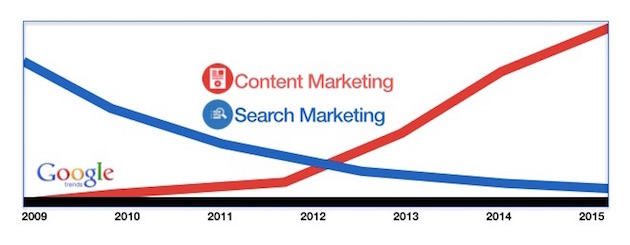
A comparison of trend lines tracking how often each search term was entered in a Google query relative to total Google search volume. (Source: Google Trends)
Since Hammock started in 1991, our focus has been exclusively on helping clients develop and use custom media and content to build long-term relationships with customers (or members, patients, etc.). With such a singular focus on content used by marketers, we’ve had a fascinating front row seat to watch as the term “content marketing” has recently ascended to buzzterm status.

By Rex Hammock
In his witty jab at the outdoor advertising of his day, poet-humorist Ogden Nash parodied Joyce Kilmer’s poem “Trees” (“I think that I shall never see, a poem lovely as a tree”) with these wonderful lines:
I think that I shall never see,
A billboard lovely as a tree;
Indeed, unless the billboards fall,
I’ll never see a tree at all.

It can be very tempting to apply the “duck test” to explain what the web is all about. The duck test is that folk-wisdom adage that suggests, “If it looks like a duck, swims like a duck and quacks like a duck, then it probably is a duck.”

If you’re old enough to recall the first decade of the Apple Macintosh, you’ll recall the term “desktop publishing.” Apple promoted the notion that software running on a Mac and connected to a color laser printer could turn the rest of us into designers and publishers. With visions of no more expensive design firms dancing in their heads, the marketing departments of companies and organizations large and small rushed to purchase desktop publishing systems.
Hammock Inc’s work for four of its clients was recognized in the just-concluded 2015 Apex Awards competition. More than 1,900 entries were received in the 27th annual Apex contest. Projects that received Awards of Excellence were:
• “A Proud Pedigree: Tracing the History of Scottish Ancestors and Their Journey to the New World,” in the Sept./Oct. 2014 issue of American Spirit magazine, published for the National Society Daughters of the American Revolution, received a Grand Award for Feature Writing. The judges praised the article: “You don’t have to be Scottish to find this in-depth, well-researched and interestingly written feature article a compelling read. You come away with a sense of the background and history of a people, and, if you happen to have Scottish ancestry, you also get an extensive range of resources with which to trace and learn more about that ancestry. A well-told story.”
• Magazine Writing (entire issue): Nov./Dec. 2014 American Spirit magazine
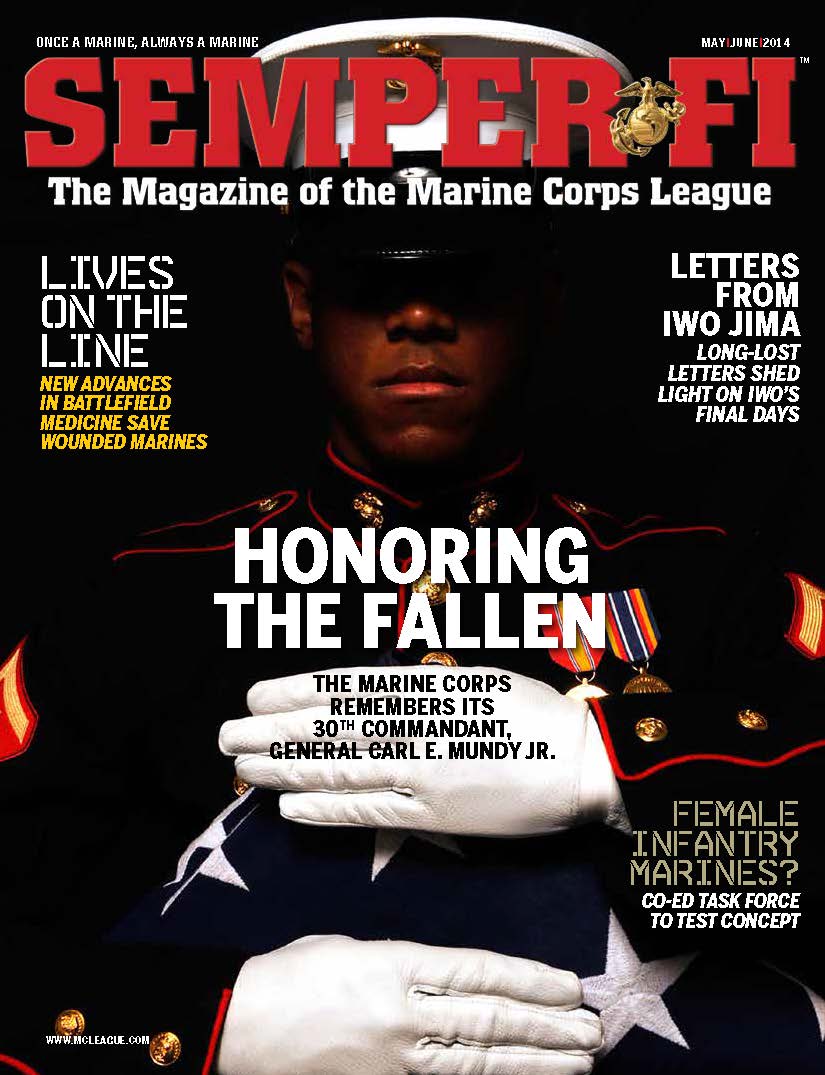 • Design & Illustration – Magazine Covers: “Honoring the Fallen” in the May/June 2014 issue of Semper Fi magazine published for the Marine Corps League
• Feature Writing: “Lives on the Line” – an article on advances in battlefield medicine also in the May/June 2014 issue of Semper Fi magazine.
• Custom-published newsletters: H2U – Health to You newsletter Sept. 2014, published for H2U, LLC.
* Custom-Published Magazines, Journals & Tabloids: The Source magazine 2014 Q3, published for HealthTrust Purchasing Group
APEX Awards are based on excellence in graphic design, editorial content and the ability to achieve overall communications excellence. APEX Grand Awards honor the outstanding works in each main category, while APEX Awards of Excellence recognize exceptional entries in each of the individual categories.
At various times, every C-level executive is called on to be the voice of the organization. However, in this era of unlimited media opportunities, how much time should those responsible for running a business devote to being a spokesperson, industry thought leader, blogger, videographer, social media guru and so on?
 For several years, we’ve recommended that marketers consider two types of timeliness when developing various types of content to use in their marketing efforts. We call one type of timeliness “flow content.” It’s the tweets, posts, updates, etc., that stream past us in real time all day and night. We call the content for the other kind of timeliness “know content.” It’s the how-to information, context, directions, etc., that we need to know right now!

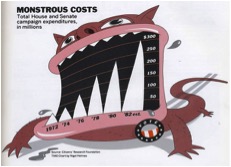
Holmes’ early, iconic style was influenced by editorial cartoons.
In 1978, a young designer from the United Kingdom named Nigel Holmes joined the chart and maps department of Time magazine. For the next 16 years, his work there helped define and popularize the types of storytelling illustrations everyone now calls “infographics.”
Well, not everyone. Nigel Holmes doesn’t call his work infographics. He calls them explanation graphics.